If you're evaluating providers for the first time (or looking to switch), the options can feel overwhelming, especially since most platforms promise the same things. How do you know which one is right for you?
Ever changing local labor laws, setting up tax registrations, drafting compliant contracts, and navigating benefits requirements — all in a country you've likely never operated in before — can be overwhelming.
For a startup trying to move fast, that's a lot of friction and a lot of potential for global hiring mistakes.
An Employer of Record takes all of that off your plate by becoming the legal employer in each international country where you hire. This way you can employ globally without the need to open local entities, which can cost between $20K and $150K (or more!) each and take months to establish.
The EOR market has grown fast, mostly because rising competition means startups have gotten smarter about where they spend their time, energy, and cash.
If you're evaluating providers for the first time (or looking to switch), the options can feel overwhelming, especially since most platforms promise the same things. How do you know which one is right for you?
This guide breaks down what actually matters for early-stage and fast-scaling teams, and ranks the best EOR providers based on the criteria that startups actually care about.
The Key Features We Looked for in EOR Providers for Startups
There are a lot of Employers of Record around, but not every EOR is built with startups in mind. A lot of them are designed for enterprise teams with dedicated HR staff, big budgets, and the luxury of time that scaling startups don’t typically possess.
So when putting this list together, we evaluated each provider to make sure they offered some (or all) of these features that are essential for startups:
Local compliance that works out of the box: The single fastest way to get into legal trouble when hiring abroad is misclassifying your workers, such as labeling someone as a contractor when local law says they're an employee. The moment you hire internationally, you're also on the hook for each country’s legally mandated entitlements, such as statutory leave, sick pay, maternity leave, and more. The EU alone mandates a minimum of four weeks of paid annual leave, and failure to provide the required time off can prove to be a significant liability. We looked for providers with strong, country-specific compliance engines that handle this automatically.
Mandatory benefits and pensions enrollment: Getting benefits and pension contributions wrong doesn't just create a compliance headache, it opens you up to audits and employee disputes down the line. We evaluated whether each provider enrolls workers in the benefits and pension schemes required by local law, and whether that process is built into their standard workflow or treated as an afterthought.
Reliable payroll and tax filing: Payroll errors can be expensive. The Internal Revenue Service (IRS) in the U.S., for example, lists failure-to-deposit penalties of up to 15% for unpaid tax deposits. We evaluated how each provider handles tax filings, social contributions, and employer tax calculations, and whether they take clear ownership of getting it right.
Full cost transparency: One of the biggest frustrations startups have with EOR providers is getting surprised by unexpected costs down the line. We prioritized providers that are upfront about what you'll actually pay, including employer taxes, social contributions, and invoicing, so you can forecast burn without guessing. Some require custom quotes, but they’ll provide clear pricing for your specific scenario before you commit.
Security and data protection: When you're handing over employee data to a third-party platform, the stakes are real. The average cost of a data breach hit $4.88M in 2024, and that's not a number startups can absorb. We looked for providers with audited security controls, role-based access, and solid privacy processes that will protect you from the spectre of an audit.
Fast, clean onboarding: Speed matters when you're hiring. But more than that, the onboarding process itself needs to be simple enough that one person can manage it without an ops team behind them. We assessed how easy it is to move from offer acceptance to signed contract, and whether the platform genuinely reduces back-and-forth.
Quick Look at the Top 7 EORs for Startups
EOR Provider
Best For
EOR Cost
Contractor Cost
RemoFirst
Startups and small to mid-size businesses
Starts at $199 per employee/month
$25 per person/month with an optional free tier for limited services
Deel
Software-first experience
Starts at $599 per employee/month
$49 per contractor/month
Remote
Entity ownership and IP protection
$699 per employee/month
$29 per contractor/month
Multiplier
Compliance-by-design workflows without entity setup
Starts at $400 per employee/month
Starts at $40 per contractor/month
Oyster
Guided, structured workflows
$699 per employee/month
$29 per contractor/month
WorkMotion
Hiring across many countries
Starts at $549 per employee/month
Starts at $31 per contractor/month
Papaya Global
Scaling teams with complex payroll needs
Quote-based with annual plans
Quote-based with annual plans
Rippling
Startups already using Rippling for HR or IT
Quote-based depending on chosen services
Quote-based depending on chosen services
1. RemoFirst
Category
RemoFirst
EOR Pricing
Starts at $199 per employee/month
Contractor Pricing
$25 per contractor/month
EOR Country Coverage
185+ countries
Ease of Use
Startup-friendly platform built around clean basics like onboarding hires, collecting docs, generating agreements, calculating costs, and tracking everything in one place
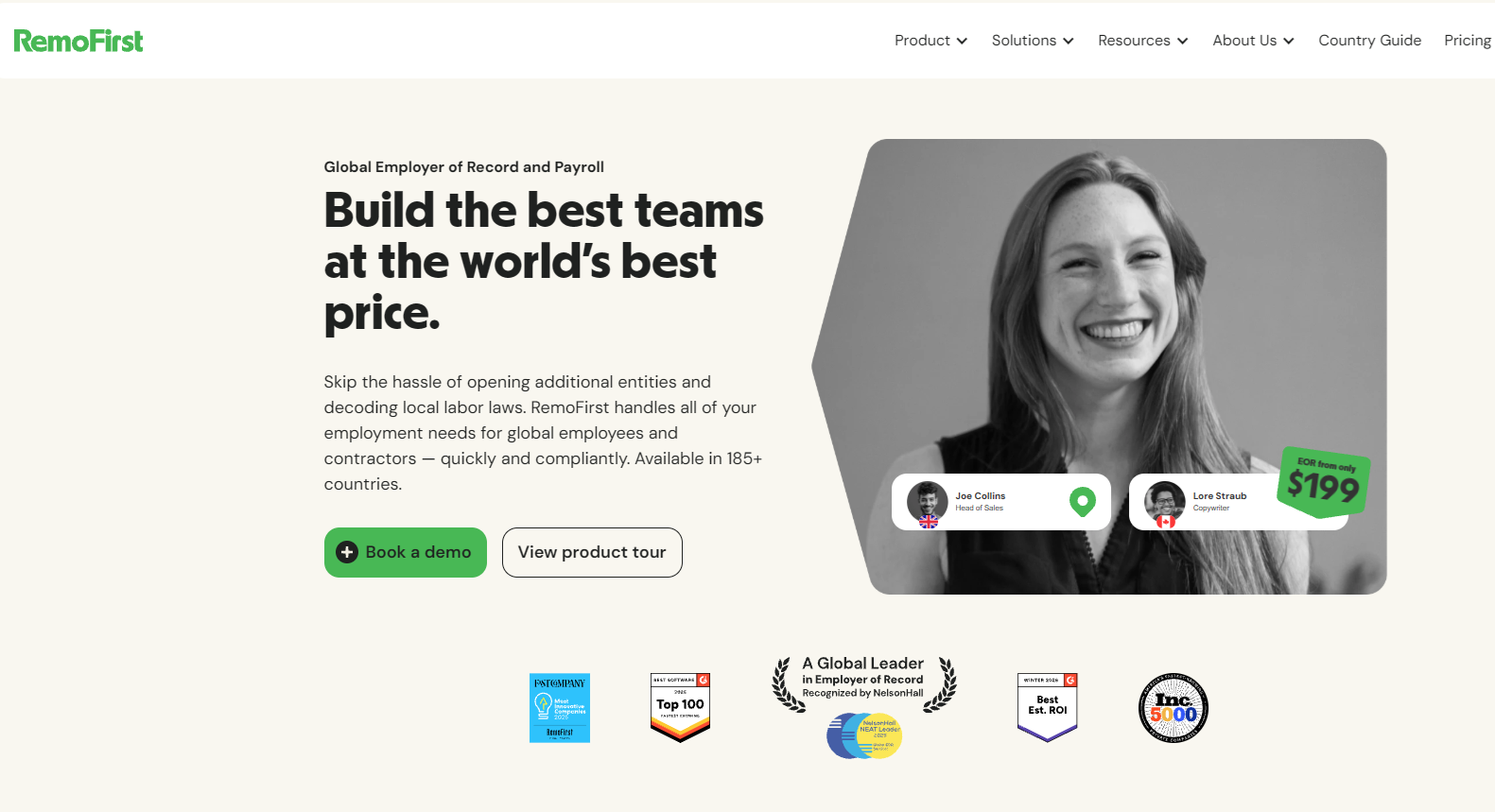
RemoFirst earns the top spot for startups because it delivers the full EOR package at a price point that's hard to beat. Starting at $199 per employee per month, you're getting compliant employment contracts, onboarding workflows, payroll management, tax filings, benefits administration, and the ability to hire across more than 185 countries without switching providers.
For early-stage and fast-scaling teams, that combination of breadth, transparency, and affordability is exactly what matters. The flat-rate pricing makes forecasting straightforward, and while your total employment cost will still vary by country due to statutory benefits and employer taxes, the actual service fee is predictable from day one.
What sets RemoFirst apart is execution speed. In most locations, onboarding takes just 1–3 days once documentation is submitted and the employment contract is approved. The process is clear and checklist-driven, without the slow, enterprise-style handoffs that drag timelines out.
Other key features include:
Clear EOR scope: RemoFirst takes full legal responsibility for employment, including international employment contracts, payroll, tax filings, benefits, and labor law compliance. This is especially critical during terminations and disputes, where startups may not be familiar with a particular country’s notice rules, final pay requirements, or required documentation.
Country-specific guides library: RemoFirst publishes country guides covering taxes, leave requirements, and statutory benefits, so you can quickly validate compensation packages before extending an offer.
No hidden fees: Explicitly states no setup fees, no onboarding fees, no termination fees, and no annual contracts or minimums.
One‑invoice, multi‑currency international payroll: You’re invoiced in major currencies while employees are paid in their local currency, so finance only needs to reconcile a single global invoice each month.
RemoHealth global benefits: Through RemoHealth, RemoFirst offers global health insurance and locally tailored health benefits via a regulated insurance partner.
Background checks: Six types of background checks (ID, sanctions, references, criminal, academic, financial history) are available from the same platform, perfect for when you hire sensitive roles.
Software-first design optimized for self-serve with localized checklists and country-specific document requirements to reduce manual steps
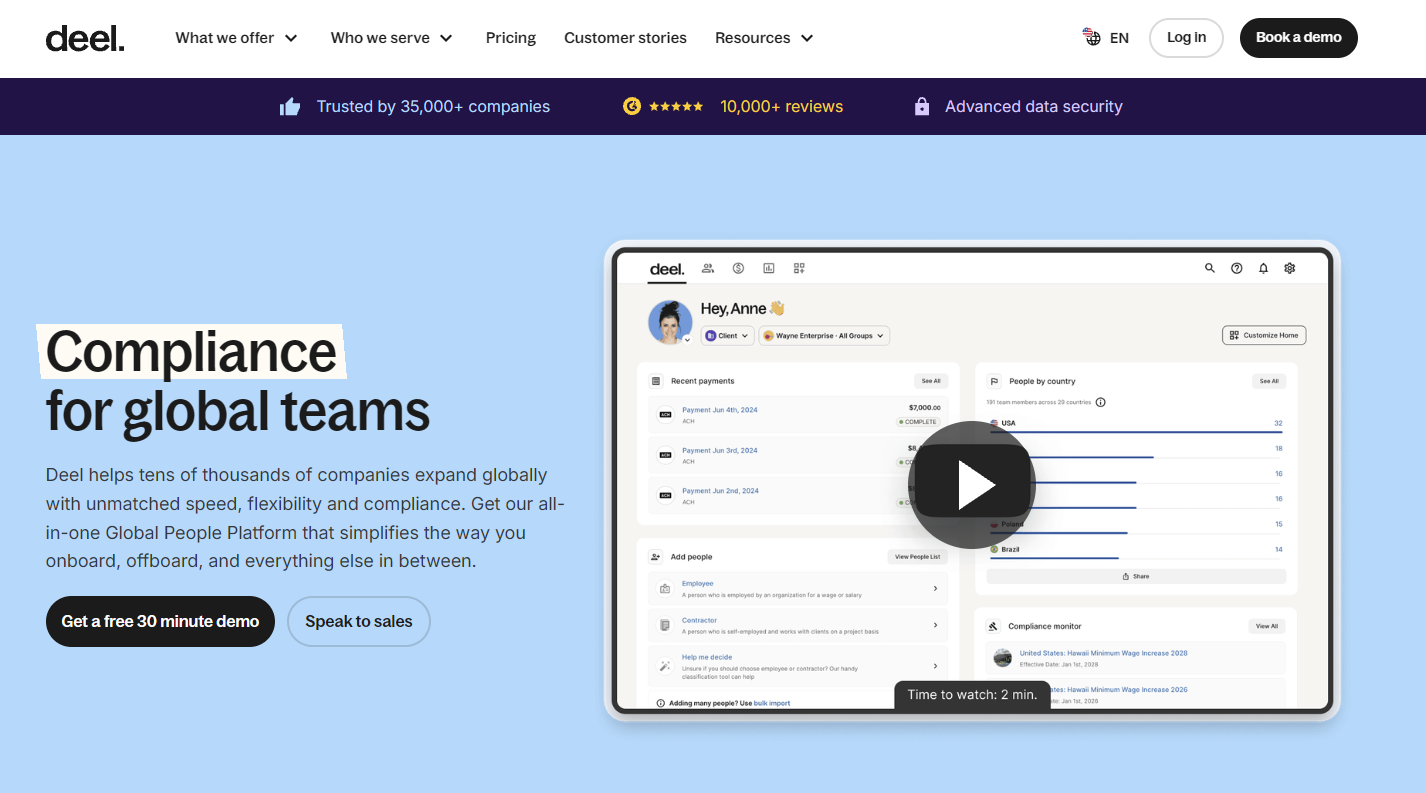
Deel's biggest strength for startups is that the product feels software first, not services first. Payroll and HR workflows are designed for self-serve, and their platform reflects modular "Deel Services" with EOR starting at a clear baseline.
The user experience is optimized for speed and autonomy. Deel claims you can decrease onboarding time to just 5 minutes using their localized checklists and country-specific document requirements.
Where Deel really differentiates itself is operationalizing compliance into the product itself through localized document requirements, contract workflows, and standardized steps that reduce human error and help you stay compliant when hiring internationally.
For terminations, each country has its own rules, but a structured EOR process helps ensure the correct steps are followed — including documented cause where required, statutory notice periods, final pay calculations, and necessary filings.
However, there are tradeoffs. As you scale, reporting and approval features may depend on additional modules. With a larger headcount, monthly costs can rise quickly if you layer in add-ons such as immigration support, equipment, or premium service tiers.
Other key features include:
Unified employee + contractor + payroll stack: Deel runs EOR, direct‑employee global payroll, and contractor management in one platform, with localized payroll compliance in 100+ countries and shared reporting across all worker types.
Deel Equity for global stock/options and tokens: Their “Deel Equity” product is built specifically to manage stock options, RSUs, and even token grants in 50+ countries, syncing equity data with payroll and handling local tax and reporting rules.
Data‑driven compensation tooling: Deel offers international compensation tools to build global salary bands, run comp reviews, and keep pay ranges competitive and transparent using data from 150+ countries.
24/7 support model: Unlike many startup-focused EORs that offer business-hours support, Deel highlights 24/7 assistance paired with local expertise — a meaningful advantage for teams operating across time zones.
Streamlined with fewer handoffs due to direct entity ownership, but can be more robust than necessary if you’re not using the broader platform
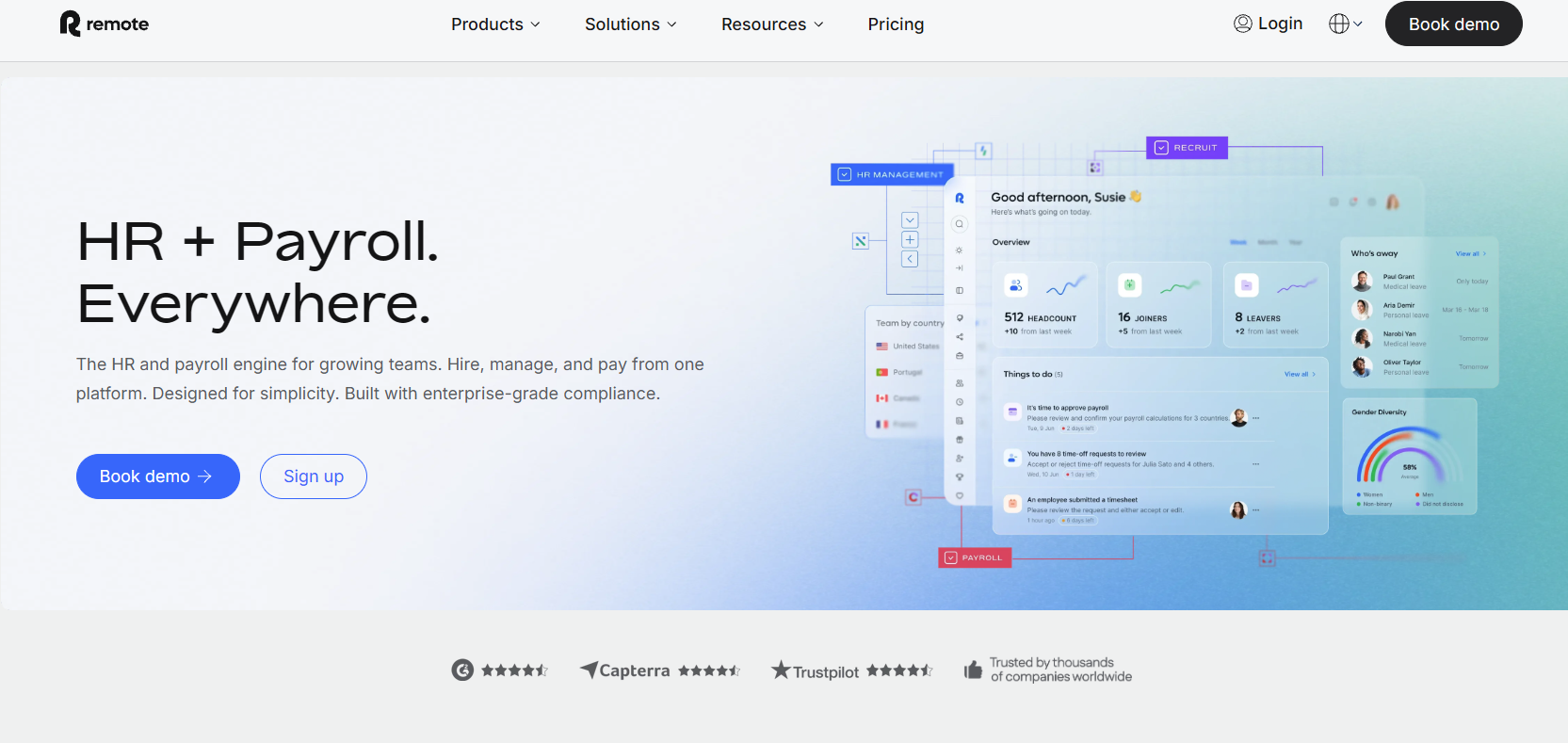
Remote's most unique value proposition is accountability through direct entity ownership. They emphasize that they own and operate 100% of their entities, no outsourcing, which translates into more consistent legal and payroll handling in the countries they cover.
This matters because a lot of EOR global employment risk comes from fragmented responsibility across partners. When something goes wrong, you don't want to be stuck figuring out which third party dropped the ball.
Remote also claims their in-house team brings 10+ years average experience to each hire, which is invaluable for business owners new to international compliance.
They also market stronger intellectual property protection tied to their entity ownership model, which can be important if you're hiring engineers or other roles where IP matters.
The trade-off is that Remote sits in the premium tier compared to budget-friendly options like RemoFirst, so your per-employee service fee is higher. Mandatory benefits and employer taxes still apply on top of the platform fee and can cause your costs to skyrocket.
Other key features include:
Remote IP Guard: Remote packages IP assignment and confidentiality into a branded IP Guard framework, explicitly designed so IP stays with your company rather than any local partner, which is critical for product and engineering teams.
Equity tools integrated with country‑specific rules: Remote provides workflows and guidance for granting stock options globally, with country‑specific equity rules built into its “Remote Equity” and Country Explorer tools.
Rich country explainer content: Remote’s public “Country Explorer” includes detailed guidance on topics like equity, benefits, and local employment norms for many markets.
Carefully designed workflows guide you through the right steps and a simple employer dashboard with country guides, contract generation, and payroll visibility
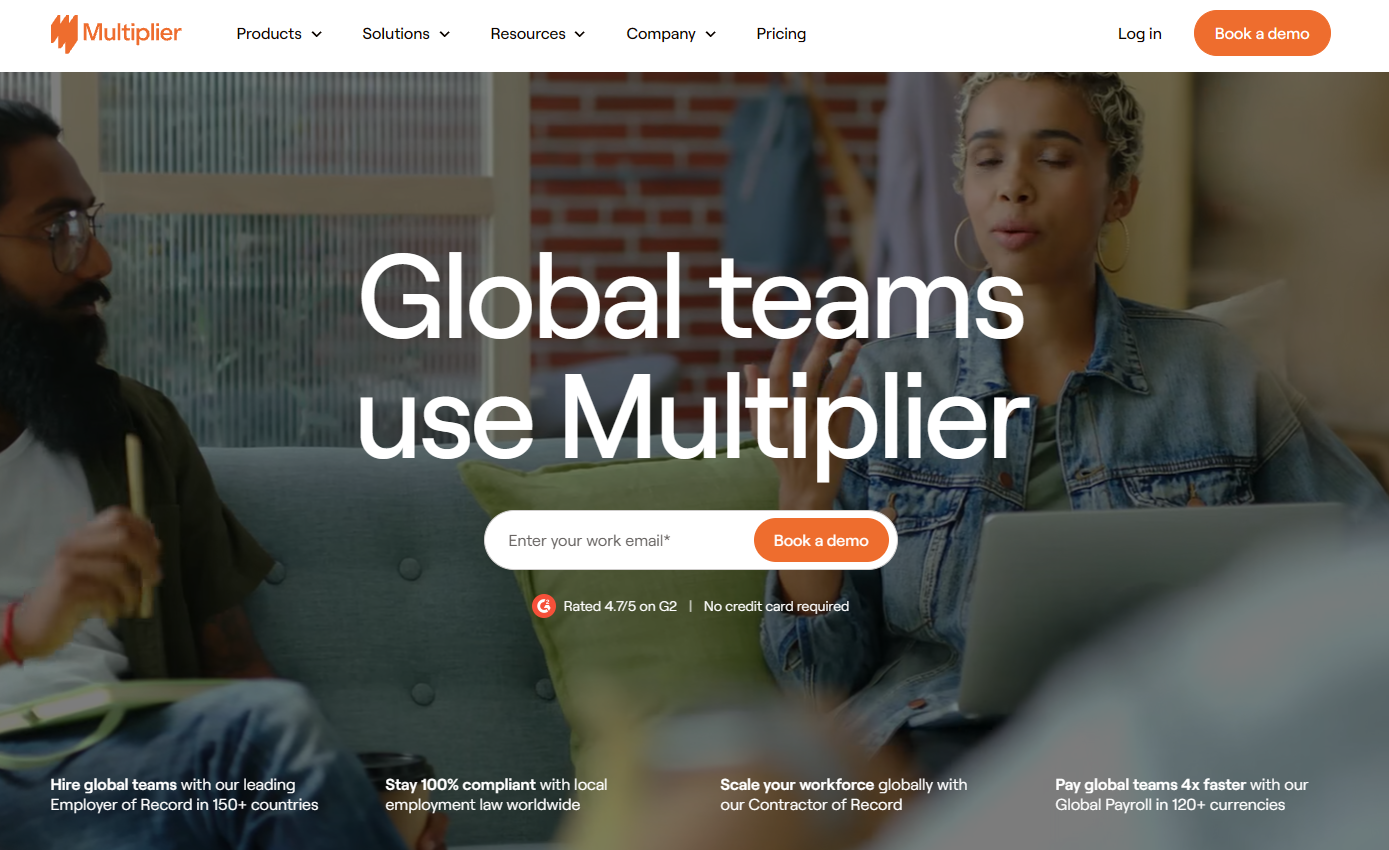
Multiplier's core promise is compliance and speed without entity setup, and their platform is built to enforce that through structured workflows.
In practice, this support is most valuable during complex moments — like worker classification questions, benefits enrollment, or navigating notice periods and final pay during a termination.
Their “compliance by design” approach is especially helpful for companies hiring internationally for the first time, as it reduces the risk of missing required steps.
Multiplier claims that you can hire and onboard employees quickly and compliantly in 150+ countries without entity setup, and that it takes just 48 hours. In practice, the timeline is most reliable in common markets with standard benefit packages, and less reliable in countries where benefits are complex or documentation is harder to obtain.
For startups, the best approach is to ask for a country-specific onboarding SLA for your top two countries, not a global average.
Separate Global Payroll product for owned entities: In addition to EOR, Multiplier offers a Global Payroll plan for companies that already have local entities but want help running payroll, social contributions, required benefits, and expense management across multiple countries.
Single dashboard for the full lifecycle: Their EOR plan specifically bundles contracts, payroll, benefits, taxes, and offboarding into one interface, so you don’t have to stitch together separate tools as you grow.
Expense management and ESOP support within payroll: Multiplier’s payroll offering includes expense management and support for administering ESOPs/benefits alongside salary and taxes, which is helpful once you start adding equity and perks globally.
Founders get comfortable quickly with onboarding status, payroll visibility, and invoicing, but may have limitations in deep reporting for advanced finance needs
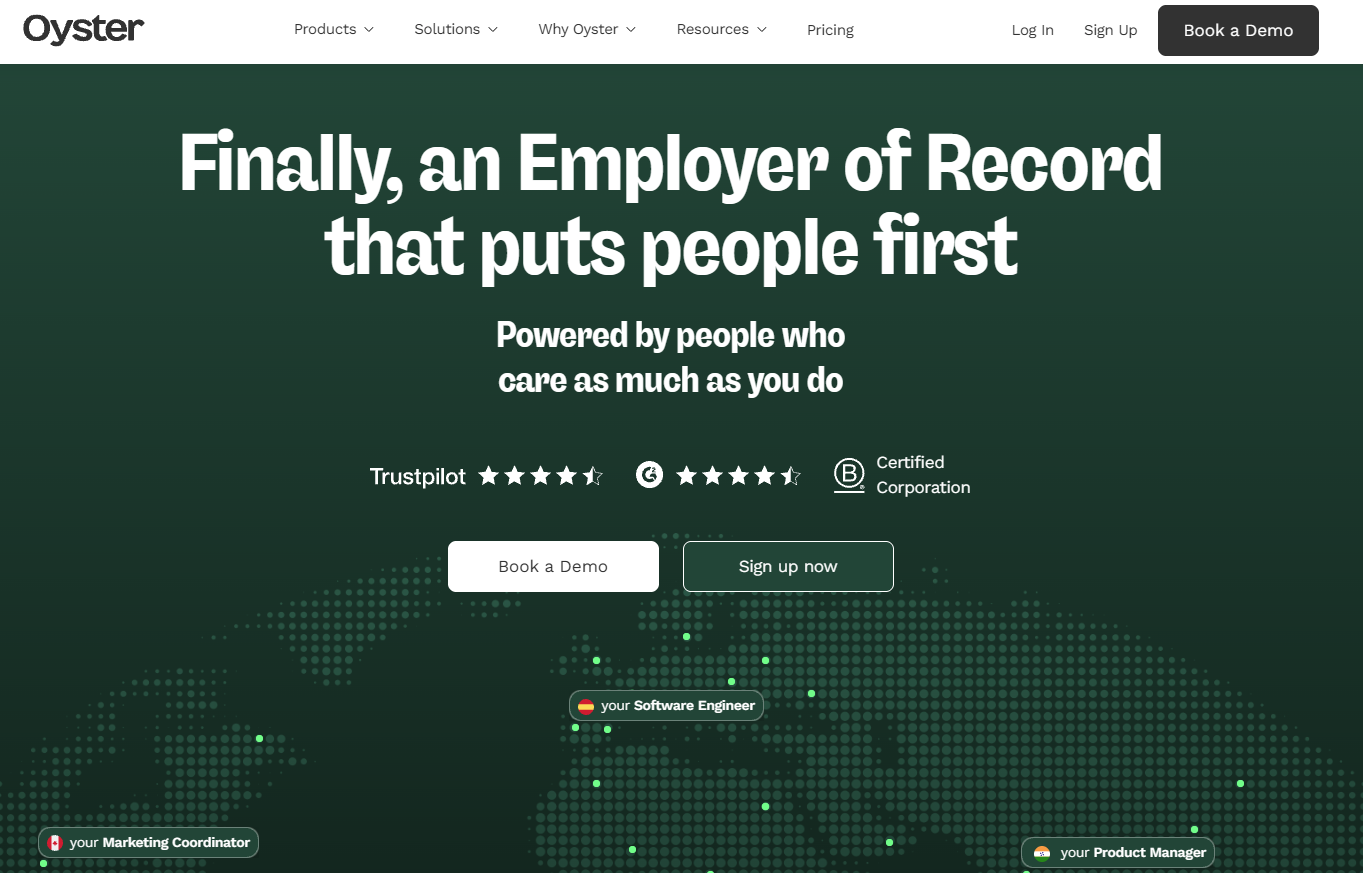
Oyster is a strong fit for companies hiring across multiple regions that want local employment rules explained clearly, with built-in guardrails throughout the process. Its approach emphasizes structure — guiding you into compliant contracts, proper payroll setup, and required benefit enrollment instead of leaving room for risky improvisation.
Where Oyster adds the most value is in reducing common offboarding mistakes. International terminations are rarely as simple as sending one email, so having the EOR manage notice periods, documentation, and final pay requirements helps prevent costly errors. The model also supports ongoing compliance, so when regulations change, updates are reflected in the process rather than relying on someone internally to catch them.
Oyster doesn’t always promote a single global onboarding timeline, as timing can vary by country and document readiness. What remains consistent is the centralized platform for hiring, payroll, and benefits, which helps reduce coordination issues and delays as you scale.
Other key features include:
Plain-language compliance guidance: Oyster tends to be strongest where the employment norms are nuanced, like benefits expectations and contract language that has to match local practice.
Total rewards and compensation insights: Oyster provides “location‑specific insights on salary, equity, and benefits” so you can design competitive total rewards packages instead of guessing at local benchmarks.
Distributed team–first design: The whole platform is framed around managing distributed teams effortlessly from one single platform, with workflows geared to async hiring and remote‑first operations rather than traditional in‑office assumptions.
Intuitive for startup ops and packaged around lifecycle basics such as contracts, payroll, payments, and support. Solid for payroll summaries and invoices but may need experts for advanced analytics
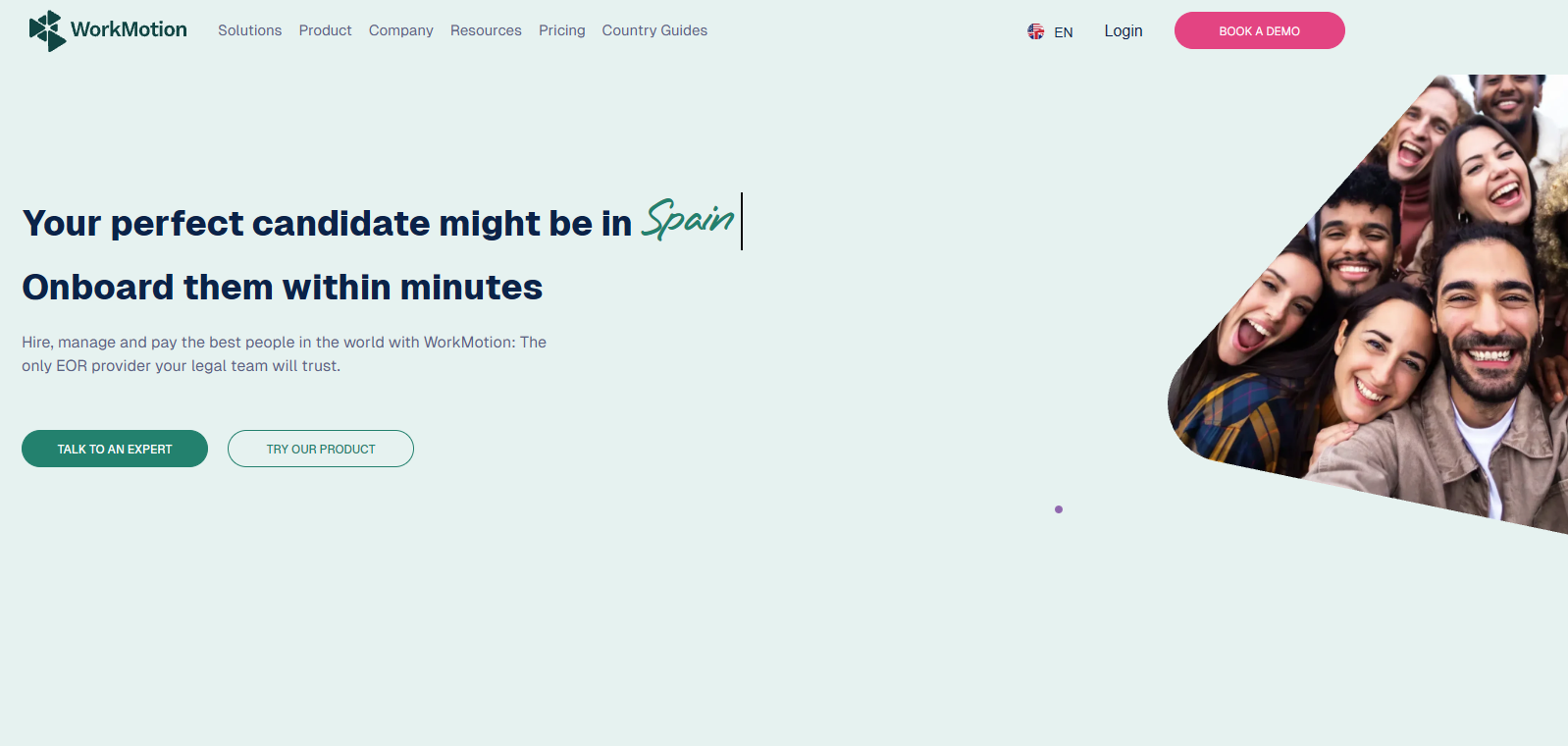
WorkMotion's coverage is a real strength for startups that hire opportunistically. They have EOR support in 160+ countries, which gives you flexibility when your next great hire pops up somewhere unexpected. On local expertise, they explicitly include access to HR and legal guidance and standard country-compliant contract templates.
WorkMotion shines when your hiring manager is pushing hard on speed but you still want a controlled process that stays reliable in a standardized flow.
Other key features include:
Direct employment under your own name: WorkMotion is unusual in that it also offers the option to hire people directly under your own legal name (not only via EOR), which gives you more control if you’re not comfortable with a third party as Employer of Record.
Positioning around “new ways of working”: Their product is explicitly framed as helping companies navigate remote and hybrid “new ways of working,” with solutions tailored to distributed setups rather than purely traditional offices.
Very startup-friendly for teams wanting one system for HR, approvals, and reporting with fewer spreadsheets and clearer ownership
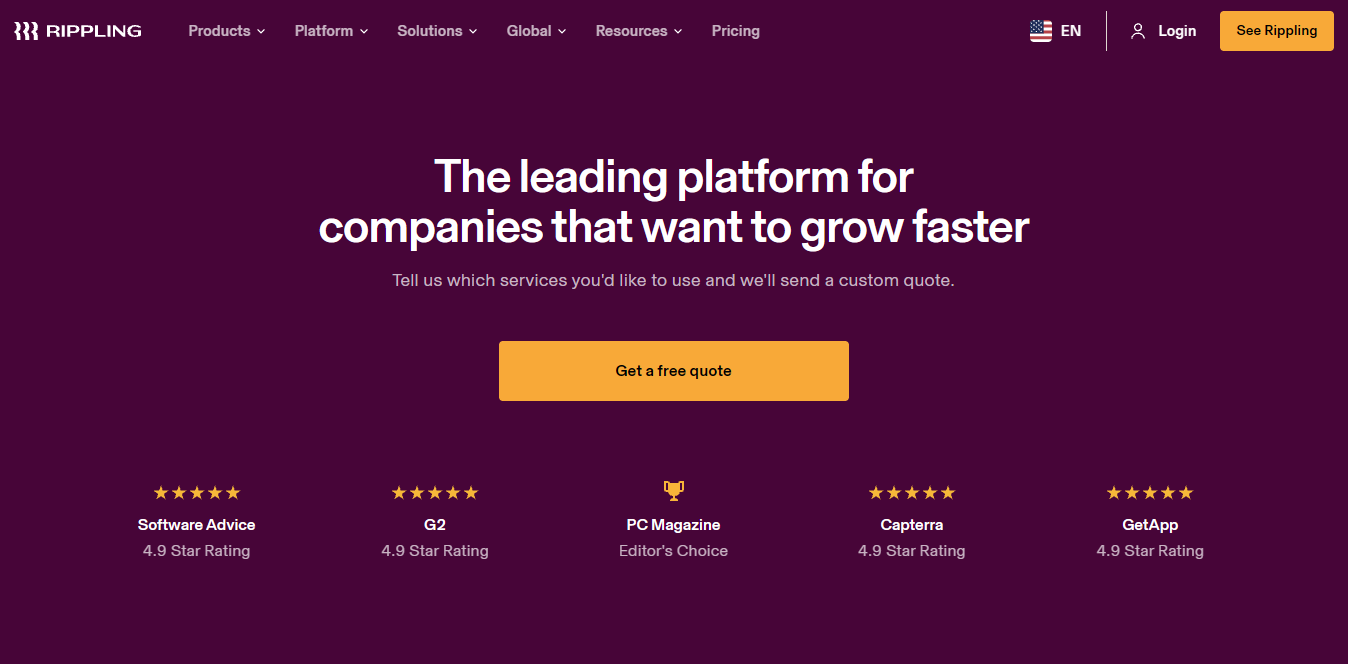
Rippling is the best choice if you’re looking for EOR plus strong internal workflows and already use the Rippling ecosystem. Once the flow is set, it reduces manual back-and-forth and keeps steps consistent. Onboarding speed is almost unmatched if you centralize employee data and processes inside the Rippling ecosystem, but much more like a normal EOR vendor if you only use the EOR services without the rest.
The trade-off is that Rippling is modular, so you need to choose what you actually need, or you can end up paying for features you don't use and confusing your internal users with unnecessary complexity.
Other key features include:
Unified platform for HR, IT, and finance: The biggest strength for startups is that the product consolidates workforce management into one system. You're not juggling separate tools for onboarding, payroll, equipment provisioning, and reporting.
Device and app provisioning baked into onboarding: Their IT module lets you ship laptops and automatically provision software to new hires worldwide as part of the same workflow that creates their employment record, which is rare among EOR providers.
Compliant and Cost-Effective Global Hiring for Startups
The EOR you choose shapes how smoothly you can hire internationally and how much operational overhead you'll carry as you scale.
There's no universal "best" option.
What works depends on whether you're optimizing for cost, speed, compliance structure, or integration with your existing tools.
If you're an early-stage startup trying to keep costs low while hiring across multiple countries, RemoFirst delivers the full EOR package at a price point that's hard to beat.
Starting at $199 per employee per month with coverage in 185+ countries, you get compliant employment contracts, onboarding workflows, payroll handling, tax filings, and benefits administration without switching providers as your hiring map changes.
If you need more robust features and don’t mind the increased costs, then the others on our list are also fantastic options to consider for your global hiring needs.